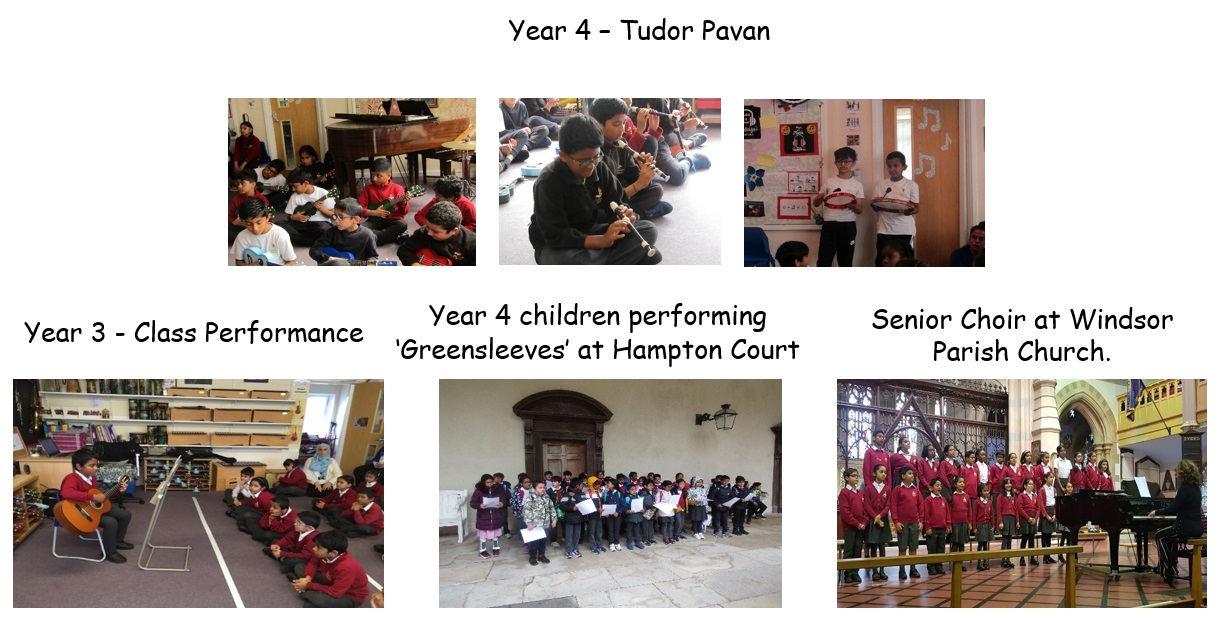
 Castleview
Music
'Research shows that at least some musical education has a positive impact on social and cognitive development in children. And these effects are long lasting - better hearing, better motor skills, improved memory, better verbal and literacy skills.' Alan HarveyResearch shows that at-least some musical education has a positive impact on social and cognitive development of children. And these effects are long lasting – better hearing, better motor skills, improved memory, bettererbal and literacy skills.’
– Alan Harvey, Musician and Neuroscientist
Key Documentation:
Music Intent, Implementation and Impact
Our vision at Castleview
Our music curriculum is designed to inspire creativity, ignite a passion for performance and develop a deep appreciation of musical expression. We want to inspire and challenge all pupils by equipping them with the knowledge and skills to develop a love of music. Through engaging with music from a wide range of historical periods, genres, styles and traditions - including the work of great composers and influential musicians - pupils learn to listen critically and evaluate thoughtfully. Children are taught to sing with confidence, use their voices expressively and compose music both independently and collaboratively. They have opportunities to learn instruments, use music technology effectively and progress towards increasing levels of musical excellence. Across their learning, pupils explore how music is created, produced and communicated, developing a secure understanding of key musical elements such as pitch, duration, dynamics, tempo, timbre, texture, structure and notation. Our aim is to nurture skilled, confident and reflective young musicians who are able to share and celebrate their musical achievements.
Curriculum Overview
End Points in our Music Curriculum:
Singing:
1a - Children can sing comfortably in 2 or 3 parts.
1b - Children understand how to sing expressively, using dynamics, phrasing and know how to use ‘tempo rubato’ and ‘fermata’ to effect.
1c - Children perform songs with a sense of occasion and understanding of how to stand, use facial expression and techniques of breathing correctly to achieve the desired outcome.
1d - Children sing songs relevant to their topics, and learn and understanding of the culture and traditional music of countries, and an understanding of the musical styles of historical eras in music, such as Baroque and Renaissance eras.
1e - Children sing regularly in performances, including yearly school shows, class assemblies and external events for choir members and sometimes year groups.
1f - Children with SEND who are resource based are encouraged to sing in their weekly additional music intervention, through action songs, role play and music and movement. Greeting songs and singing and ‘intention’ are used.
Instrumental skills
2a - Children can play the ukulele to a good standard, being able to play at least C, G, F, Am and Dm chords proficiently, as per the Rock School and RGT Ukulele Debut grade requirements.
2b - Children can read tab notation for Ukulele.
2c - Children understand forms and styles of music, and can play the required chord sequences, for example - 12 bar blues. They can play traditional music linked with topics, such as Maya and Mexican folk songs.
2d - Children can play a C scale on the ukulele and understand how pitch changes and how to use the frets to move up and down in half and whole steps.
Cross Curricular Music
Incorporating music into the curriculum isn’t just about teaching students to sing or play instruments, it’s a powerful tool that can enhance learning across a wide range of subjects. For primary teachers, integrating music with other areas of study can make lessons more engaging, memorable and effective. Here’s how music can be used to support learning in subjects like Maths, English, Science and Social Studies.
Maths:
- Rhythm and Counting: Musical rhythms involve counting, and subdividing note values into fractions (e.g., quarter, half, and whole notes), and patterns. Clapping or playing instruments can make abstract mathematical concepts more tangible.
- Sequences and patterns A musical sequence is much the same as a maths sequence; a rule or ‘action’ is observed, such as plus 2 – minus one; in maths adding and then subtracting and in music, moving up 2 pitches and then dropping one.
- Dividing values into blocks or measures Musical bars are divisions of measures beats or note values, like grouping in maths.
English:
- Rhyme and Meter: Explore rhyme schemes and poetic meter through song lyrics. Analysing songs can enhance students’ understanding of poetry and encourage them to notice patterns in language.
- Storytelling and Composition: Encourage students to write their own lyrics as a form of storytelling. This activity supports creative writing skills and can be integrated with lessons on narrative structure.
- Reading and understanding text of a song Songs, like prose, involve reading at speed and comprehension of the text involved.
- Mind mapping and Structure Pieces of music involve organisation of structure and musical elements to create an introduction, climax and conclusion just like a piece of creative writing.
Science:
- Sound Waves and Vibrations: Use musical instruments to demonstrate scientific concepts like sound waves, vibration, and pitch. Experiments with different instruments can illustrate how variations in wave frequency and amplitude affect sound.
History, Geography and PSHE:
- Cultural Music Exploration: Integrate music from different cultures to enhance lessons on geography, history, and cultural studies. Listening to and discussing music from around the world can foster cultural awareness and appreciation.
- Historical Events and Figures: Use songs that reference historical events or figures to spark interest and discussion. Songs from or about a specific time period can provide insights into the emotions, attitudes, and social contexts of the era.
- Emotional and psychological response to things around us Much like the world around us, music has an effect on our emotions and physical responses.
Physical Education:
- Movement and Dance: Music provokes interpreted and organised physical movement such as in dance, and is an extension of physical instruction.